
Leadership Resource Reintroduced to Foster Discipleship Culture (Part 1)
By Chris Wilterdink
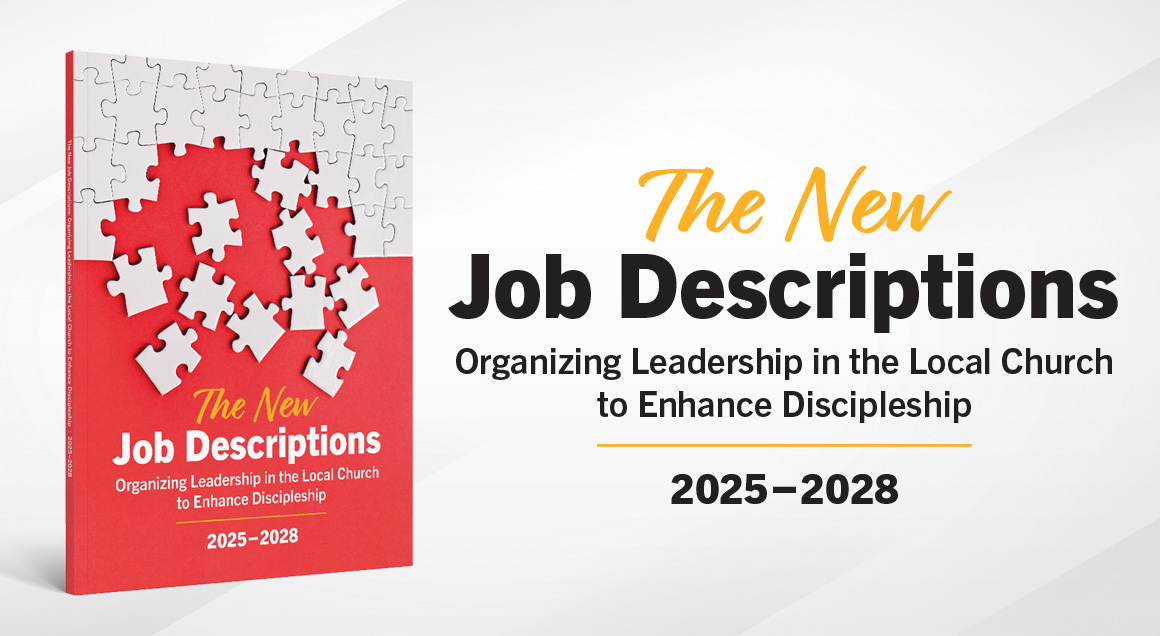
Are you a leader in your local ministry setting who is asking these kinds of questions?
- How do leadership development and discipleship complement each other in your church?
- How do you (and other leaders in your congregation) identify and invite new leaders to consider serving?
- What is already amazing and what could be better about the culture of discipleship in your congregation?
- What does a healthy balance of responsibilities between paid staff and volunteer leaders look like in your context?
- What does a healthy balance of responsibilities between clergy (elder/deacon/licensed local pastor) and lay leaders look like in your context?
Over the last year, we have been updating a resource last published in 2016 to reflect changes for local congregational leaders and to incorporate discipleship into the foundation of the various positions in local church guidance. If the questions above interest—or challenge—you, please check out The New Job Descriptions: Organizing Leadership in the Local Church to Enhance Discipleship by Chris Wilterdink.
Purchase the New Job Descriptions Book
Here's an excerpt below.
Most church leadership positions are not the lead pastor role. As our call stories unfold and we take God’s nudges more seriously, we experience a variety of opportunities to lead, organize, and serve. If you’re interested in our new resource, you have probably held a variety of titles in church leadership, taking on many paid and unpaid “jobs” within a congregation. Each of those “jobs” taught you something about discipleship. This resource explores the charge to order the life of the church through a variety of those “jobs.” It may be used by pastoral or lay leadership as a guide to identify and equip laity for leadership roles within the church’s chosen organization and structure.
In 2025, The Council of Bishops and The Connectional Table released the following vision: “The United Methodist Church forms disciples of Jesus Christ who, empowered by the Holy Spirit, love boldly, serve joyfully, and lead courageously in local communities and worldwide connections.”
These job descriptions can equip laity and clergy to love, serve, and lead, helping The United Methodist Church turn that vision into a reality.
Larger membership churches often have multiple paid staff members, while smaller churches typically have fewer (if any) full-time staff. All sizes of churches rely on laity to take leadership roles within the church. This resource will help a lead pastor, lay servant, or organizing committee identify, invite, and equip congregation members to step forward in leadership by taking on job descriptions related to ordering the life of the church with a focus on developing a culture of discipleship.
We use the term “job” to mean duties and responsibilities that, when done well, breathe life and vitality into the church. These “jobs” are not compensated. Think of them more as roles that steward the congregation’s spiritual life and faith in action. These roles represent our response to membership vows and the ways we are called to transform the world as we are transformed through service. Providing a job description simplifies how we talk about leadership roles. No job is forever, and the tasks of current church leadership must include developing a sense of calling and recognizing talents in the next generation of leaders. The templates included in this resource can be modified to fit your church context. They should be considered more as starting places than finish lines. The job descriptions are meant to help existing church leaders identify congregational needs for future leadership and serve as a reference for leaders in each job during their time in service.
Leadership and Intentional Discipleship
The New Job Descriptions: Organizing Leadership in the Local Church to Enhance Discipleship can play a part in your responsibility of ordering the life of the church and improving the vitality of your congregation. How? By connecting leadership roles to discipleship through networked teams for a lifetime of faith formation.
The suggestions in this resource are grounded in scripture, Wesleyan theology, and a systematic approach that recognizes the “priesthood of all believers.” The appendix section and online supplements on our website can support suggestions in this resource. Practical tips and templates for individual “jobs” and ideas about how those jobs might be effectively organized make up the bulk of this resource.
Discipleship Ministries produces a number of resources to support and challenge local churches and other ministry settings to establish a culture of discipleship that is intentionally organized and effectively measured. An up-to-date list of these resources can be found here. Some resources are foundational (A Guide to Developing an Intentional Discipleship System and Engaging Your Community or the “Belong Series”); other resources are supplemental (videos for specific committees and teams, spiritual gifts assessments, tools for measuring and evaluating for discipleship, and others).
How could you use this resource?
- A pastor, lay leader, or administrative council may use these job descriptions to create leadership roles and an organizational chart for staff and church members, whether lay or clergy.
- Church leaders may read these job descriptions as a discernment tool as they think and pray about who would be ideal for the roles based on their spiritual gifts, skills, areas of passion, and maturing discipleship. Those invited into leadership positions may also read the job descriptions as they discern how they feel called to serve.
- Church leaders could also use the job descriptions as a recruitment tool. Church leaders may include a copy of the job description in an invitation to serve the church or to serve in a leadership role. These job descriptions can clarify what the church asks of volunteers or staff in leadership roles.
- Church leaders and the person serving in the role can refer to the job description as a point of reference to ground their work and share expectations.
- Church leaders and the person serving in the role can refer to the job description as an aid for assessment to determine if the needed functions of the job are positively impacting discipleship in the local church and community.
Want to know more about The New Job Descriptions: Organizing Leadership in the Local Church to Enhance Discipleship? We have developed forty job descriptions based on the sample template (click here to see sample template). You will find positions common to every church (for example, staff/pastor-parish relations, finance, and trustees chair) as well as positions that may inspire you to expand into a new area (church media/communications, intergenerational coordinator, and NOW [Nurture, Outreach, and Witness] coordinator). The New Job Descriptions guide will also point you to resources available to nurture a “culture of call” and create a space for discernment for all to hear God’s voice and say yes to following as a disciple.
Where can I learn more?
Leadership Resource Reintroduced to Foster Discipleship Culture (Part 2)
The New Job Descriptions: History and Hopes
Turning The New Job Descriptions into Discipleship Tools: Practical Ideas for Church Leaders
Purchase: The New Job Descriptions Book
Contact Us for Help
Contact Discipleship Ministries staff for additional guidance.