
Youth Lessons
Note to the Teacher
To save time, you can precut the prison cell doors instead of having the students do it. Ideally, students can cut out the bars and contemplate the lesson at the same time. Times are based on a fifty-minute lesson period but may be adjusted as needed.
NEEDED RESOURCES:
- Construction paper
- Scissors
- Writing utensilsAn example prison cell door would help visual learners see what they are supposed to create.
Icebreaker: Best Gift Ever? (10 min.)
Students will take turns sharing the best gift they’ve ever received. Ask them to talk about the occasion and the gift itself, but not why it was special. As they answer, sort students into small groups (4-5 students per group ideally) based on the gift (either type of gift or occasion). Once the youth have been sorted into groups, have them share their names, then have them share with their small groups why the gift was so special to them. Adult volunteers should participate as well.
Read Scripture (5 min.)
Our scripture reading today comes from Philippians. Paul, the author, wrote it while he was in prison, awaiting trial. He wrote the entire book to the church in Philippi, a young church facing societal opposition. Ask someone to read Philippians 1:21-30 (CEB).
Discussion (15 min.)
Paul keeps on writing, even while in prison, for the good of the church that is full of new believers to benefit those young Christians. That is his gift to them.
- We talked about the best gift you’ve ever gotten, but what’s the best gift you’ve ever given someone else?
- Paul says in verse 29 that it is a privilege (a gift) to not only believe in Christ but to suffer for Christ’s sake. What does that mean to you?1
Paul calls for unity in the body of Christ.
What does it mean for a group of believers to have unity?
- Does it mean they agree on everything all the time? Why or why not?
Read Romans 5:3-4.
- In this scripture, also written by Paul, he says that we should be happy when we have problems (endure suffering). What was his reasoning?
- Paul likely wrote this book of Romans before he wrote the book of Philippians.2 Do you think he would have written something different after being imprisoned for so long?
Activity and Discussion (20 min.): A prison of your own making.
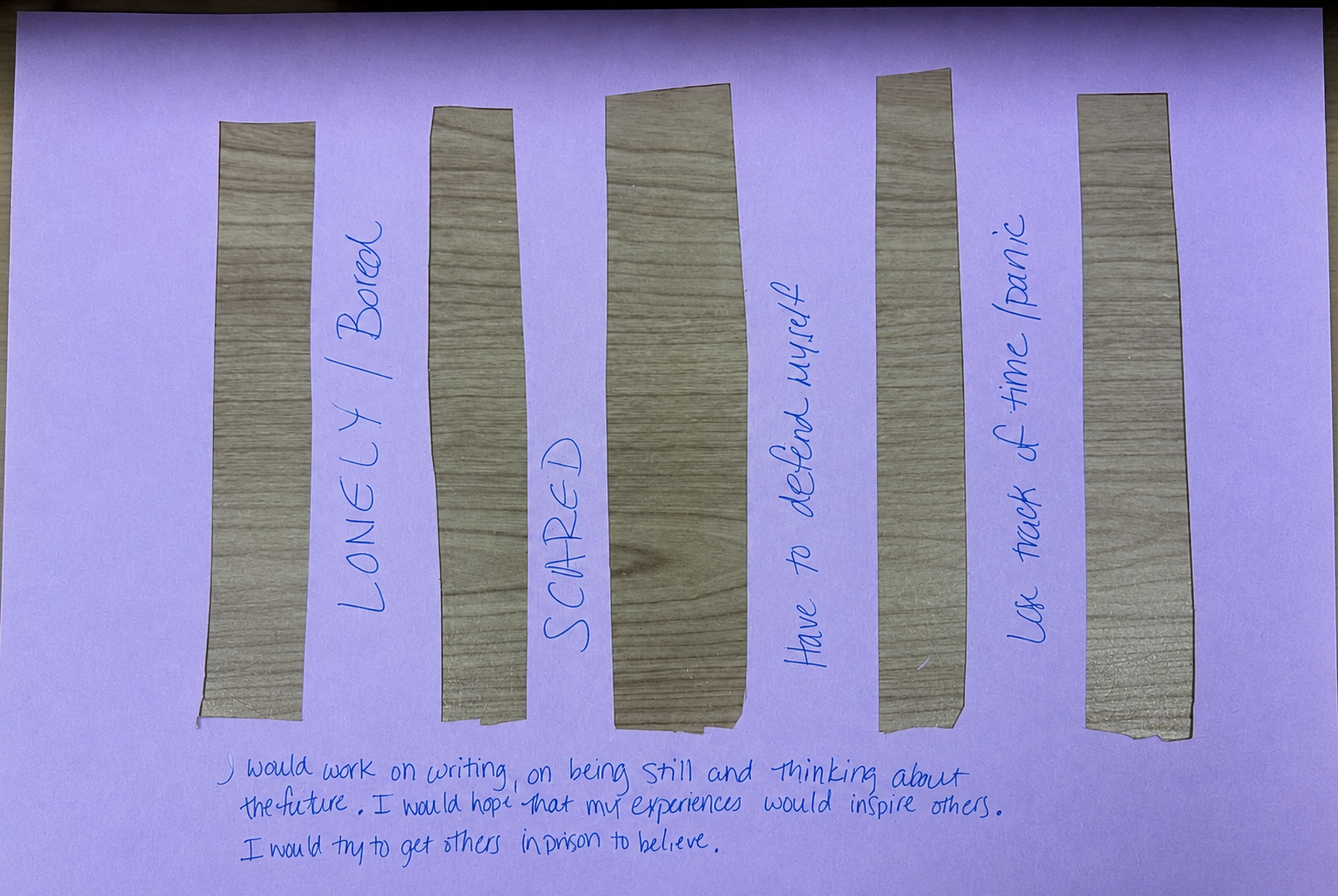
Have the students create a paper prison cell door from construction paper by cutting strips out of a piece of construction paper, leaving the paper intact at the top and bottom (see sample below).
Then have them write on each of the “bars” how they think being imprisoned would affect them. In the space at the top and the bottom, have them write “gifts” they could work on while imprisoned that would help their group reach others for Christ.
After they finish, have them share what they created with the group. Adult volunteers should also participate.
Close in the manner that is typical for you. Consider taking joys/concerns from the students, then asking for a volunteer to close in prayer.
Sample "Prison Cell Door"
In This Series...


Colors
- Green
In This Series...