
History of Hymns: 'Abundant Life (We Cannot Own the Sunlit Sky)'
By Guest Contributor Cassidi Jackson
Abundant Life (“We Cannot Own the Sunlit Sky”)
by Ruth C. Duck
We cannot own the sunlit sky,
the moon, the wild-flowers growing,
for we are part of all that is
within life’s river flowing.
With open hands receive and share
the gifts of God’s creation,
that all may have abundant life
in every earthly nation.
© 1992 GIA Publications, Inc. Used by permission. All rights reserved.
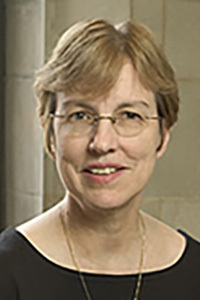
Dr. Ruth C. Duck (1947–2024), theologian, minister, and educator, skillfully invites Christians to engage with matters of social justice through personal reflection and profound compassion. Her experience as a professor of worship at Garrett-Evangelical Theological Seminary (1989–2016) and as an ordained minister in the United Church of Christ amplified her witness and gave her space to practice the unity and love she had preached. In the words of Robin Knowles Wallace, emerita professor of worship and music at Methodist Theological Seminary, Ruth C. Duck’s hymn texts “call for a world that looks more like God’s vision for the world, with flourishing nature. . . and flourishing human relationships based on justice, mercy and love” (Duck, 2025).
The world today bears witness to the influence of controlling forces through unjust governmental practices, war, and the unequal distribution of wealth. Power resides in a while excluding others, creating a world of inequality and injustice. The gospel of unity seems lost among the rampant voices of division.
Duck lifts up an alternative vision in her hymn text. “We cannot own the sunlit sky,” written in 1984 while she was serving on the United Church of Christ Board for World Ministries (1975–1985). This hymn follows several others she wrote for the organization’s “One Great Hour of Sharing” all-church offering, which supports the board’s worldwide endeavors (Forman, 1998, p. 493). Initially, she titled the hymn “Abundant Life,” drawn from John 10:10, “that all may have abundant life.” Duck’s text centers on God’s creation, both in nature and humanity, and how all creation may live in abundant harmony. Duck notes, “I attempt to express a theology of Christian mission which goes beyond separations of ‘haves’ and ‘have-nots’, or ‘givers’ and ‘receivers’, to emphasize humanity’s shared partnership with God in caring for one another and the whole creation” (Duck, 1992, no. 46).
The first stanza focuses on the natural created order, a topic of increasing alarm due to the growing awareness of climate change that began in the mid-twentieth century. Duck proposes that nature is a gift of God, something that cannot be controlled by humankind, emphasizing that all of nature’s resources are to be freely given to all earthly dwellers.
The stark reality described in stanza two reminds us of pervasive human-made suffering: war is never-ceasing; children are starving, and homelessness abounds. While these situations are intense and overwhelming, “God calls humanity to awake” to find a point of commonality with our neighbors and care for them, analogous to Jesus’ parable of the Good Samaritan (Luke 10:25–37). The final stanza continues the call to unity. Finding partnership with one another opens us to “creat[e] a future free of want and fear.” Only through the combined efforts of humanity can we create a new world of peace and abundance.
This gentle, socially-conscious text showcases one of the great legacies of Duck. According to The New Century Hymnal (1995), “she wanted to emphasize humanity’s shared partnership with God in caring for one another and the whole creation” (Hymn 563). She not only calls for justice for all of God’s creation but reminds us that justice can be as impactful as standing in love alongside one’s neighbor. Although Duck does not deliver a harsh message in her poetry, she calls us to take bold action with warmth and hope, particularly through the celebration of nature’s bounty.
The text has been paired with several tunes. In Duck’s 1992 collection, Joy F. Patterson’s (b. 1932) RISING SUN accompanies the text. The tune LA GRANGE by Marty Haugen (b. 1950) is in cut time, most often in D major, and moves through a straightforward and predictable harmonic structure, creating a tension between the sweetness of creation and the melancholy of a world that has yet to find peace. A similar effect is created when the text is sung to the folk-like pentatonic tune ENDLESS SONG (“How Can I Keep from Singing”), often ascribed to Robert Lowry (1826–1899), a common pairing in hymnals. The text has also been used in various choral arrangements, including “Abundant Life” with original music by Rob Glover (GIA Publications, Inc.).
The hymn first appeared in the author’s collection, Dancing in the Universe (1992), and subsequently in The New Century Hymnal (1995), followed by twelve additional hymnals in Canada, Ireland, and the USA.
Ruth Duck’s worship and liturgical resources are internationally and ecumenically renowned. Her hymn collections can be found in four publications: Dancing in the Universe (1992), Circles of Care (1998), Welcome God’s Tomorrow (2005), and The Poetry of Grace (2015). She earned degrees from Southwestern-at-Memphis University (now Rhodes College, B.A.), the University of Notre Dame (M.A.), Chicago Theological Seminary (M.Div.), and Boston University School of Theology (Th.D.). Duck was an established preacher in the United Church of Christ, serving churches in Oak Park, Illinois; Hartford, Wisconsin; and Milwaukee, Wisconsin.
Sources:
“About Ruth Duck” (2025): Ruth Duck, Hymnwriter, https://ruthduck.com/about-ruth-duck/.
“Abundant Life,” Hymnary.org, https://hymnary.org/text/we_cannot_own_the_sunlit_sky#tune.
“Abundant Life,” setting by Rob Glover (Chicago: GIA Publications, Inc., 1993), https://giamusic.com/resource/abundant-life-print-g3952.
Arthur C. Clyde, Editor, The New Century Hymnal (Cleveland: Pilgrim Press, 1995).
Ruth C. Duck, Dancing in the Universe: Hymns and Songs (Chicago: GIA Publications, Inc., 1992).
Kristen L. Forman, Editor, The New Century Hymnal Companion: A Guide to the Hymns (Cleveland: Pilgrim Press, 1998).
Cassidi Jackson is an MSM (master of sacred music) student at Perkins School of Theology at Southern Methodist University, where she studies hymnology with Dr. Marcell Silva Steuernagel. Jackson was raised in Augusta, Georgia, and received her Bachelor of Arts in music at the Schwob School of Music in Columbus, Georgia. She currently serves as the music director at First United Methodist Church in Gainesville, Texas.
Contact Us for Help
Contact Discipleship Ministries staff for additional guidance.