
A Searching World and a Present Church
By Isaiah Park
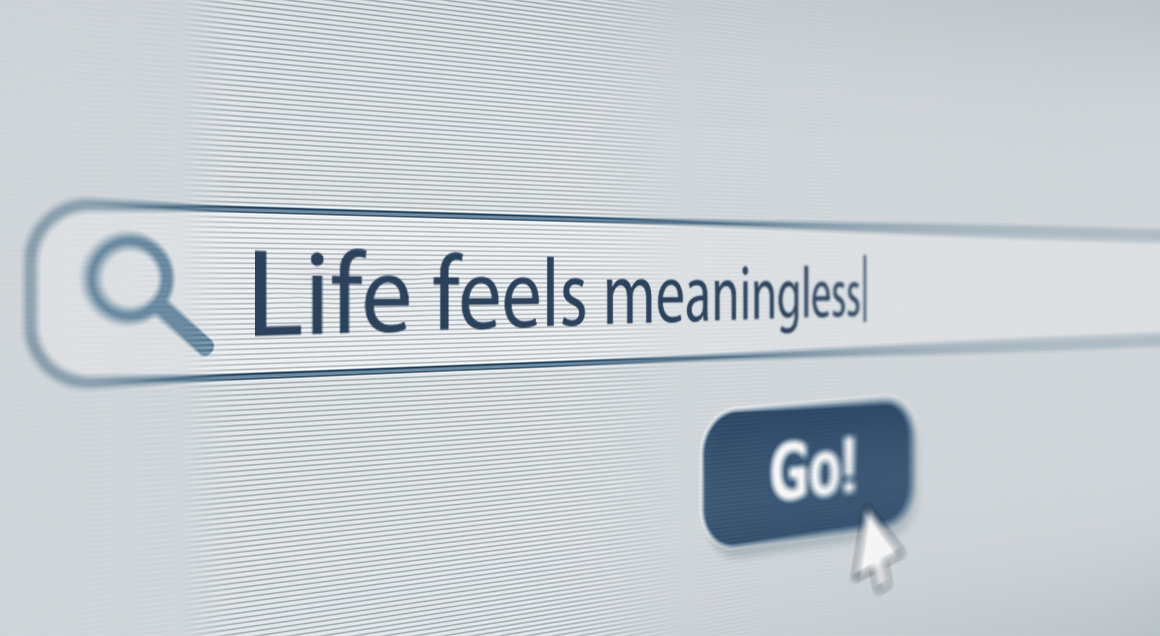
To be “spiritual but not religious” often means a person is open to God, prayer, meaning, transcendence, healing, or spiritual reality, but does not strongly identify with organized religion or institutional church life. Many people are not closed to faith. They are searching for belonging, purpose, guidance, and hope in a world that often feels confusing, disconnected, and overwhelming.
Recently, a young woman told me, “My life feels meaningless.” She explained that the day before we met, she had sat alone in the quiet glow of her phone screen late at night. Her room was quiet and still, but her mind was not. Questions moved her to type into the search engine of her phone:
How do I deal with anxiety?
How do I know my purpose?
Why do I feel disconnected from everyone?
How do I find meaning in life?
Is there something more to life?
Tell me about God.
Tell me about hope.
No pastor was in her room, and no church building was nearby. No small group was gathered. However, something deeply spiritual was happening. She was searching for more than information. She was reaching for meaning and trying to make sense of her life.
This is one of the most important mission fields for the church today.
People are asking questions that the church should care about. Behind many online searches is a deep human longing: “Where do I belong?” “What story is large enough to hold my pain, my hopes, my relationships, my identity, and my future?”
In a world filled with information, many people are still searching for wisdom. In a culture overflowing with content, many people are still longing for connection. People are living through rapid technological change, cultural confusion, loneliness, and anxiety. In the middle of it all, they are searching for help, hope, belonging, meaning, and spiritual reality.
What Data Suggests
The way people search online reveals something important about the times in which we live. According to Google, search prompts such as “Tell me about…” increased 70% every year. The search prompt “How do I…” was the most popular in 2025, up 25% from the year before.
This shift matters because a “what is” question seeks a definition; a “tell me about” request seeks explanation, context, and understanding. A “how do I” question reaches for guidance, practice, and direction. These are signals of people trying to interpret their lives, relationships, fears, decisions, and future.
People have a deep need for connection and belonging. The American Psychological Association’s 2025 Stress in America report described a “crisis of connection,” reporting that 54% of U.S. adults “felt isolated from others,” 50% “felt left out,” and 50% “lacked companionship.” APA also reported that “only 58.5% of U.S. teens always or usually receive the social and emotional support they need.”
If we step back, the deeper needs seem clear. Meaning, guidance, belonging, emotional support, trustworthy relationships, spiritual depth, and help navigating a confusing technological and cultural moment are at hand. People are looking for a life that makes sense and has meaning.
Belonging: Why Do I Feel Disconnected?
One of the great questions today is, “Why do I feel disconnected from everyone?” Many people are digitally connected but relationally lonely. They may have followers, contacts, and group chats, but still lack people in their lives who truly know them, remember their stories, pray with them, and walk alongside them through life.
Belonging is a basic human need. Belonging is innate. People need to be part of communities and friend groups where they are known, welcomed, remembered, and supported. They need relationships where they can bring their real selves and experiences, and not just their curated selves. The church can offer a sense of belonging that goes beyond audience-building. The church gathers around Christ, the table, prayer, story, and shared life. In a disconnected age, the church can be a warm, welcoming community where people discover they are not alone but are seen and welcomed.
This kind of belonging begins in simple but powerful ways. When a young adult explained why she chose to return to a particular church, she answered, “I visited this church once. Then I returned in six months, and when I came back, they remembered my name.” That sentence carries a deep truth: People are not necessarily looking for impressive programs, polished worship services, or perfect answers. They seek a community where someone notices when they are there, remembers when they return, and cares enough to call them by their name.
Presence: The Word Became Flesh
Many people who are spiritual but not religious are not necessarily rejecting God. Some are unsure about institutions. Some have been wounded by religious communities. Some are skeptical of organized religion but still spiritually hungry. Some believe in God without belonging to a church, and they carry spiritual questions without a community to help them.
What can the church offer people? Presence.
Presence means coming near in the way of Jesus. It means listening before speaking, building trust before building programs, and creating tables where people are known, honored, and welcomed. It means meeting people in neighborhoods, coffee shops, parks, workplaces, campuses, recovery communities, dinner tables, and everyday spaces where life is happening.
Presence is incarnational. John’s Gospel says, “And the Word became flesh and lived among us” (John 1:14). In Jesus Christ, God did not remain distant, abstract, or detached from human pain. God came near. Jesus walked dusty roads, ate at tables, touched the sick, knew people’s names, welcomed sinners, wept with the grieving, confronted injustice, and embodied the grace and truth of God. A lonely world needs embodied witness. An anxious world needs patient presence. A hurting world needs communities that practice compassion. Proclamation and incarnation belong together.
Meaning Rooted in a Larger Story: How Do I Find Meaning in Life?
One helpful way to understand the search for meaning is through sensemaking theory, especially the work of organizational theorist Karl E. Weick. Weick is widely recognized for studying how individuals, groups, and organizations interpret confusing or uncertain experiences. His work helps explain how people try to create order when life feels unclear, disrupted, or overwhelming. Weick described sensemaking as the process through which people create order and meaning. He writes, “The basic idea of sensemaking is that reality is an ongoing accomplishment that emerges from efforts to create order and make retrospective sense of what occurs” (Weick, 1993, p. 635, as cited in Bruce K. Berger, Juan Meng, Public Relations Leaders as Sensemakers, Routledge, 2014, p. 7). Sensemaking asks, “What is going on here?” and “What does this mean?”
This matters for ministry because people are living with uncertainty. They are trying to make sense of anxiety, work, relationships, politics, technology, identity, suffering, and the future. The church has a profound gift to offer. It helps people locate their lives within the larger story of God.
Lesslie Newbigin’s The Gospel in a Pluralist Societyoffers an important theological lens. Newbigin insists that the gospel is not merely a private religious belief or one spiritual preference among many. The gospel is public truth, a claim about reality and the entirety of life. In a pluralist society, people are surrounded by many competing stories about meaning, identity, freedom, success, spirituality, and purpose.
Newbigin writes, “The gospel is not just the illustration… of an idea. It is the story of actions by which the human situation is irreversibly changed” (Lesslie Newbigin, The Gospel in a Pluralist Society). This reminds us that the church offers more than words and advice. The church can bear witness to God’s decisive actions in Jesus Christ.
Fresh Expressions: A Hopeful Pathway for a Searching World
Fresh Expressions United Methodist (FXUM) offers a hopeful pathway for the church today. FXUM is described as “a distinctly Wesleyan Spirit-led movement of new Christian communities that serve the present age.” It is rooted in the conviction that the Holy Spirit is already at work in the world and that the church is called to join God’s mission beyond the walls of the church building. Fresh Expressions often begin through listening, relationship-building, prayer, and contextual engagement with a particular community. They may take shape around dinner tables, coffee shops, neighborhoods, campuses, workplaces, breweries, recovery communities, online spaces, or other everyday places where people gather.
Michael Beck, Director of FXUM, shares that “withness” is about presence, relationship, and shared life. A ministry of “withness” looks like this:
- The church sits at the table with people, not above them.
- The church listens to people’s real stories, not just addresses perceived needs.
- The church builds trust slowly, not transactionally.
- The church creates community with people, not just by hosting events.
- The church receives gifts from the community as it offers resources to the community.
- The church does ministry with the people and the community.
The ministry of “withness” means entering the everyday spaces where people live, work, play, gather, struggle, and hope, and then listening deeply. We can discern where the Holy Spirit is at work, and then we can join God there with the people.
A Challenge for This Moment
The world is searching and asking, “How do I make sense of life?” The church can draw near and practice the ministry of “withness” not only with words, but with presence. Perhaps this could begin with something as beautiful and sacred as learning and remembering people’s names. Where are God’s fingerprints visible in the lives, longings, wounds, and hopes of our neighbors? In this searching moment, the church should do more than say that we love our neighbors and community. The church must draw near, lean in, listen deeply, and be present with people. As we practice the ministry of “withness,” we begin to see how the Holy Spirit is already moving in people’s stories, struggles, gifts, and hopes. The challenge before the church is to ask, “How will we practice the ministry of ‘withness’ in a world that is deeply spiritual, deeply searching, and longing for hope?”
Recommended Books:
- Michael Beck and Jorge Acevedo, A Field Guide to Methodist Fresh Expressions(Abingdon Press, 2020)
- Bruce K. Berger, Juan Meng, Public Relations Leaders as Sensemakers (Routledge, 2014)
- Grace Ji-Sun Kim, Invisible: Theology and the Experience of Asian American Women(Fortress Press, 2021)
- Lesslie Newbigin, The Gospel in a Pluralist Society(Eerdmans, 1989)
- Prasanta Verma, Beyond Ethnic Loneliness: The Pain of Marginalization and the Path to Belonging(IVP 2024)
For questions or additional information, please contact Isaiah Park at [email protected]
Contact Us for Help
Contact Discipleship Ministries staff for additional guidance.