
Read a Chapter a Day: Testimony from a Reader
By Rev. Dr. Richard Fitzgerald
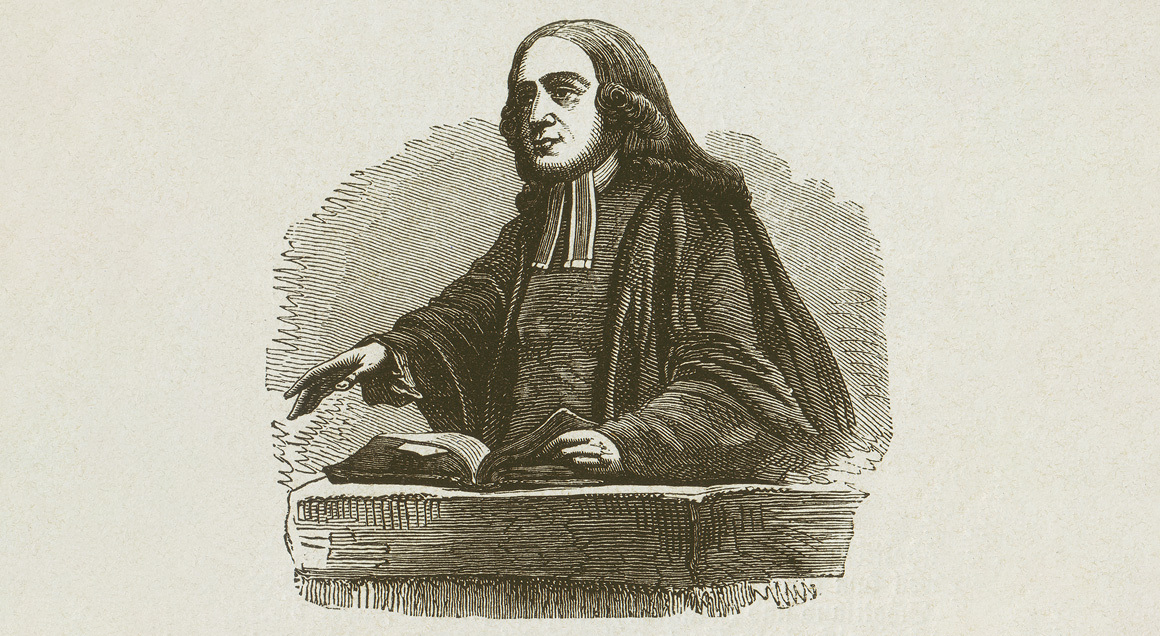
This article is a testimony about reading scripture that aligns with our Read-a Chapter-a-Day initiative, September 8 - October 19, 2026. Read-a-Chapter-a-Day is an invitation to connect with God and others through a shared reading of Scripture for 6 weeks. The author, Rev. Dr. Richard Fitzgerald, serves as the Great Plains Conference Circuit Pastor. He has pastored churches in Kansas and Missouri.
I confess that I am addicted to reading. I have always been a reader, tearing through Stephen King, exploring the haunting depths of Shirley Jackson, traversing the cosmos with Arthur C. Clarke, and unpacking dense philosophical theology with Richard Middleton. However, when it comes to the Bible, my reading history is checkered. One year, I read the entire Bible in January and then did not read any more of it for two months. Sometimes I’ve read daily, and other times, it has been a struggle to find time to read one verse.
Reading the Bible Is Different from Reading Other Texts
My reading of books and of the Bible stands in striking contrast. For years, I struggled with this contradiction while trying to read the Bible regularly. I failed. Then one day, I was reading the Preface to John Wesley’s Notes on the Old Testament, and I reached paragraph eighteen.
18. If you desire to read the scripture in such a manner as may most effectually answer this end, would it not be advisable,
- To set apart a little time, if you can, every morning and evening for that purpose?
- At each time if you have leisure, to read a chapter out of the Old, and one out of the New Testament: if you cannot do this, to take a single chapter, or a part of one?
- To read this with a single eye, to know the whole will of God, and a fixed resolution to do it? In order to know his will, you should,
- Have a constant eye to the analogy of faith; the connection and harmony there is between those grand, fundamental doctrines, Original Sin, Justification by Faith, the New Birth, Inward and Outward Holiness.
- Serious and earnest prayer should be constantly used, before we consult the oracles of God, seeing “scripture can only be understood thro’ the same Spirit whereby “it was given.” Our reading should likewise be closed with prayer, that what we read may be written on our hearts.
- It might also be of use, if while we read, we were frequently to pause, and examine ourselves by what we read, both with regard to our hearts, and lives. This would furnish us with matter of praise, where we found God had enabled us to conform to his blessed will, and matter of humiliation and prayer, where we were conscious of having fallen short. And whatever light you then receive, should be used to the uttermost, and that immediately. Let there be no delay. Whatever you resolve, begin to execute the first moment you can. So shall you find this word to be indeed the power of God unto present and eternal salvation. (EDINBURGH, April 25, 1765)
A Wesleyan Way to Read Scripture
As I read this, I realized that reading the Bible is supposed to be different from reading Stephen King! Wesley was setting out an intentional, rhythmic pacing for a spiritual practice. I consume literature, but God invites me to commune with scripture. This has liberated me from the daily Bible reading, checking-the-box mentality. I’ve wrapped my Bible reading into Morning Prayer from the Book of Common Prayer, reading a chapter of the Old and New Testaments as a prayerful conversation with God. When it comes to literature, I enjoy racing through the next book. With the Bible, I’m learning to settle into a mutual conversation with the God who loves me more than I can imagine. Today, I seek to help the people in the churches I work with catch the joy and power of spending time communing with God through scripture. It is a life-changing practice.
My Bible reading practice has been shaped by Wesley’s six steps for reading that dramatically changed my spiritual practice. I also think there is a wonderful correspondence between the approach that has been introduced for Read a Chapter a Day, the “5 Suggestions for Surveying Scripture”, and Wesley’s steps. It may be instructive to look at that correspondence.
- Simmer. Wesley would have probably used “Set Apart” for this phase of our reading time. He wrote, “set apart a little time, if you can, every morning and evening for that purpose…" The purpose he tells us to seek is life transformation. It was only when I changed my perspective from consuming Bible verses to soaking or simmering in the Bible to be transformed that the Bible became a living thing within me. Before we interact with the biblical text, we need to create relational space by intentionally pausing the daily grind and establishing the environment for an encounter with God.
- Speak. I think Wesley would have used “Scripture” here, but the intent is the same. He wrote, “...read a chapter out of the Old, and one out of the New Testament: if that cannot be, to take a single chapter…" We must literally take up the text, to read silently or, following the excellent suggestion, to read aloud. With “Read a Chapter a Day,” we are perfectly matching Wesley’s grace-filled concession for those lacking extended “leisure.”
- Study.Wesley’s word was “Search.” He said in his fourth step that when we search the scriptures, we should “have a constant eye to the analogy of faith, the connection and harmony there is between those grand, fundamental doctrines.” We search the chapter we are reading using our God-given reason. We don’t need to know the Greek verbs or cross-reference dates, but as we read, we search for the relational "harmony" of the whole narrative. We use our intellect to see how this single chapter connects to the grand, ongoing story of God's love. I often ask myself three questions as I read: “What stands out to me here? What does God seem to be saying to me right now through this chapter? What should I do about it?”
- Scribe. Writing out the text feels too much like journaling to me! But the point here is to take time meditating on what the Spirit is saying in the moment. Wesley wrote in his instructions, “Earnestly to pray for His assistance, whose Spirit alone can give us an understanding of His word.” This is Wesley’s sixth step, but it really covers the entire process from simmering to the final step below of surrender. We are asking the Spirit to make the words of the Bible alive in us so that they aren’t historical relics, but real-time dialogue with the God of the text.
- Savor.Wesley wrote in his third and fifth steps, “read this with a single eye, to know the whole will of God, and a fixed resolution to do it,” and “frequently…pause, and examine our own hearts by what we read.” I wrote above that I often ask what my actions should be in response to what I’ve read. It’s not enough for us to merely read the Bible; we need to let the Bible read us. We need to examine our hearts and resolve to act.
Reading Scripture Transforms Day by Day
As you read a chapter each day with me, I propose we use the “savor” suggestion to write one promise we will keep for the next twenty-four hours in response to what we've read and what God is asking us to do. It might be to connect with a friend or someone in need, to send a thank-you note, to meditate on a song and how it relates to each situation you encounter throughout the day, or whatever the Spirit prompts you to do that day. Then, and I believe this is essential, when you sit down the next day to simmer at the beginning of your reading, ask one question: “What happened because of yesterday’s promise?” I believe that as we approach God daily in this way, with one chapter of the Bible, each of our lives will be transformed in ways we never thought possible.
Going Deeper
- Learn more about Read-a-Chapter-a-Day initiative:
- What is Read-a-Chapter-a-Day?
- Read-a-Chapter-a-Day is a 6-week initiative to encourage people to practice what John Wesley, founder of Methodism, would call a “means of grace.” A means of grace is a practice or action that creates an opening to experience God’s presence and grace.
- Participants are invited to sign up to receive bi-weekly emails, free downloads, and a scripture reading plan.
- Churches, small groups, or even individuals are encouraged to meet weekly to share reflections and learnings from the practice of reading scripture daily. A small group discussion guide will be available for use.
- A weekly Zoom meeting on Sundays will provide an opportunity to connect with others who are also joining in Read-a-Chapter-a-Day.
- Visit our Resources page for testimonies of readers, the Zoom link for weekly meeting, downloads for tracking your reading, small group meeting guides, and much more!
- What is Read-a-Chapter-a-Day?
Join our Email List - Register Here
- Share this opportunity with others. Invite them to sign up and join you this fall.
Book Suggestions
- Richard Fitzgerald’s suggestions for books to nurture daily scripture reading:
- Richard J. Foster, Celebration of Discipline: The Path to Spiritual Growth (HarperSanFrancisco)
- Why I recommend it: This is a modern classic that is easy to read. It discusses reading scripture and prayer not as rigid tasks, but as joyful habits that open us to God's changing grace.
- Why I recommend it: This is a modern classic that is easy to read. It discusses reading scripture and prayer not as rigid tasks, but as joyful habits that open us to God's changing grace.
- Robert Mulholland Jr., Invitation to a Journey: A Road Map for Spiritual Formation (InterVarsity Press, 2016)
- Why I recommend it: This book explains how spiritual growth is a lifelong, fluid process. It shows how God uses daily rhythms to transform us for the sake of others.
- Why I recommend it: This book explains how spiritual growth is a lifelong, fluid process. It shows how God uses daily rhythms to transform us for the sake of others.
- M. Robert Mulholland Jr., Shaped by the Word: The Power of Scripture in Spiritual Formation(Upper Room Books, 2001)
- Why I recommend it: This is the ultimate book on shifting from "consuming" the Bible to letting it "read us." It completely aligns with my emphasis on communing with God instead of checking a box.
- Why I recommend it: This is the ultimate book on shifting from "consuming" the Bible to letting it "read us." It completely aligns with my emphasis on communing with God instead of checking a box.
- Stephen Seamands, Give Them Christ: Preaching His Incarnation, Crucifixion, Resurrection, Ascension, and Return (InterVarsity Press, 2012)
- Why I recommend it: While written with ministry in mind, this book is accessible to everyone. It focuses on the "Optimism of Grace"—the dynamic belief that Christ is actively present, changing our daily lives right now.
- Richard J. Foster, Celebration of Discipline: The Path to Spiritual Growth (HarperSanFrancisco)
Contact Us for Help
Contact Discipleship Ministries staff for additional guidance.