
Collective Neuroplasticity: Rewiring Churches for Innovation
By Isaiah Park
For much of the twentieth century, scientists believed that the adult brain was fixed. By adulthood, neural structures were thought to be stable and largely unchangeable. However, modern neuroscience has overturned that assumption. The brain is flexible and malleable.
Neuroplasticity refers to the brain’s ability to reorganize itself by forming new neural connections throughout life. Repeated thoughts and experiences strengthen certain pathways, and over time, what is rehearsed becomes reinforced. This is an idea often summarized in what became known as Hebb’s rule: neurons that fire together, wire together. 1 What we repeatedly focus on shapes what we believe is possible. This is true for individuals and also for church congregations.
When Decline Becomes the Default
Research shows that trauma reshapes neural pathways, and repeated stress strengthens connections related to fear and protection.2 The brain adapts for survival.
Churches can also experience trauma through congregational decline, changes in the neighborhood, or disaffiliation that leads to an exodus. Stories of “the good old days” grow louder as the present feels smaller. Over time, a congregation’s mindset can become patterned around loss. Their conversations rehearse a scarcity mindset; their identity attaches to a distant memory, and their capacity for imagination diminishes. If decline is rehearsed long enough, it becomes assumed. However, neuroplasticity works in more than one direction.
Rewiring for Possibility
The same brain that wires around trauma can rewire around hope. Research demonstrates that repeated exposure to new frameworks can reshape cognition. 3 Gratitude practices activate regions associated with resilience and well-being.4 Social psychologist Albert Bandura shows that a group’s shared belief in its capacity can significantly predict its outcomes.5
Believing reorganizes behavior.
A congregation cannot innovate if it interprets reality only through the neural connections of its past. Innovation requires imagination, and imagination requires new pathways. So how does a church cultivate collective neuroplasticity? It begins with what we hear, believe, and rehearse.
Learning to See Seedlings
I heard a story about parents who loved a local botanical garden for its mature trees and full blooms. They longed to bring their young daughter when she was old enough to appreciate its beauty. When they finally brought her, she ignored the grandeur and pointed to something in the dirt. Tiny seedlings were pushing through the soil. At first, the parents saw the seedlings as insignificant. However, when they knelt and saw the world through their daughter’s eyes, their perception changed. They could see that the seedlings were part of the botanical garden's full beauty. They could not help but smile.
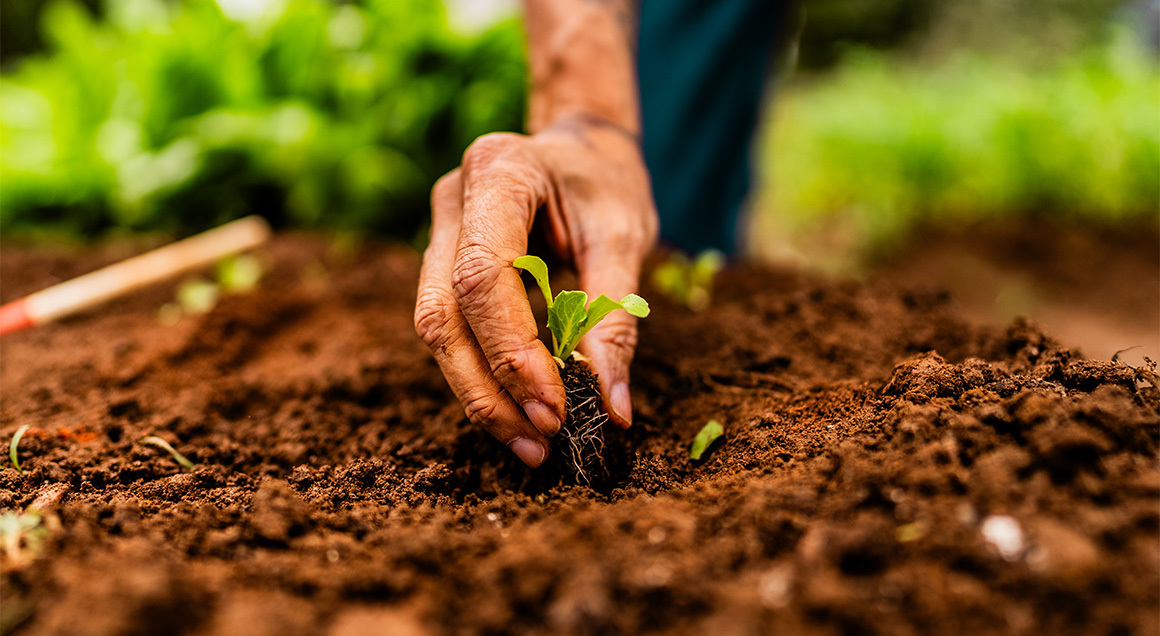
Similarly, churches often measure vitality like mature trees. They look at large choirs, full classrooms, and expansive programs to gauge the church's vitality. However, innovation rarely begins with fully grown structures. It begins with seedlings: a new partnership, a small dinner gathering, families exploring faith together, or friends serving the community alongside one another.
If a congregation cannot recognize seedlings as vital, it will overlook the future that is emerging. Rewiring requires retraining our attention. Below is a story by Rev. Chet Jechura, the pastor of Good Shepherd United Methodist Church in Baltimore, Maryland. He explains how a small, aging congregation that had once been marked by decline shifted from a narrative of decline to one of faith and fruitfulness.
Believe by Rev. Chet Jechura
In the pilot episode of the hit series Ted Lasso, Coach Lasso tapes a makeshift yellow sign to the locker room wall, featuring the word BELIEVE inked in blue. AFC Richmond is a struggling soccer team facing loss after loss, but the sign inspires them to reach beyond their current reality, work together to defy the odds, and invest themselves in a future filled with hope.
Five years ago, when I began as the pastor of Good Shepherd United Methodist Church in Baltimore, Maryland, it was evident that the church was approaching the end of its life cycle. The revitalization achieved prior to the pandemic was undone by the pandemic's far-reaching impact. An overwhelming majority of the small congregation was over age eighty, and there was not a single active family in the church. It did not resemble the community it had been a part of for more than a century. In the two years that followed my arrival, I held the hands of many faithful as they died. I celebrated funeral after funeral. Death was our constant reality. Our small congregation was quickly getting smaller. However, I grew to appreciate that helping people die well and officiating funerals can be meaningful expressions of love and engagement with those beyond the church.
I often say that Good Shepherd UMC is a small church with a big mission: we are called to care for the needs of God’s children within and beyond our walls. During the season of death and numerical decline, a deepening within our congregation began to take place because we remained focused on our mission. We leaned into loving one another well. We focused on hospitality. We drew the circle wide. We opened our doors to our neighbors by offering community meals. We formed new community partnerships. We prepared our building to meet a community need by hosting a state-licensed, affordable childcare.
The church had a designated children’s play area in a prominent part of the sanctuary, and we enhanced it. A small table and a set of chairs were donated; extra toys and coloring books were added, and a bulletin board was installed on a nearby wall. On the day we formally relaunched the children’s play area, I borrowed a play from Coach Lasso’s playbook. I pinned our own makeshift BELIEVE sign to the bulletin board and invited our aging and dwindling congregation to trust that if we remained focused on our mission, children and families would one day be part of our faithful flock again. We believed.
It did not happen overnight. It did not happen in one month. It was more than a year before we had our first family visit. But we did not give up. We did not accept our season of death as having the last word. We continued to believe in God’s resurrecting power – even when all the evidence proved otherwise – and we prepared ourselves to participate in God’s resurrecting work by focusing on our mission and loving well.
One day, one of our neighbors inquired about singing with our choir, which was more akin to a trio or quartet. She simply wanted a creative outlet to sing; she was not initially interested in church. The choir embraced her with open arms and supported her through a difficult time in her life. She felt loved and welcomed by the congregation, and what was preached and practiced gave her room to wrestle, explore, doubt, and deepen her faith journey. Eventually, she brought her two sons with her to a worship service. Several months later, she shared a proposal for engaging with children and families in the community. Last fall, “Good Shepherd Helpers” was born. Now, on the first Sunday of each month, anywhere from six to ten children gather during a portion of the worship service to engage in a service-related activity. Recently, the “Good Shepherd Helpers” made care kits to share with our unhoused neighbors.
Our church is still small, but our mission is still big. God’s resurrecting power is actively transforming us. We are deepening. Our mission is expanding. We are more closely resembling our community. We are becoming more diverse, and we are loving through it all. In many ways, we are only just beginning … again. We believe. And if your church has experienced a similar season of death and decline, we invite you to believe with us, too.
Believe Before You See
Instead of surrendering to a narrative of decline, Good Shepherd United Methodist Church chose to rehearse a different word, “Believe.” That single word began reshaping their imagination. Scripture reminds us in Romans 10:17 (NRSVUE6), “So faith comes from what is heard, and what is heard comes through the word of Christ.” Faith is formed through repeated hearing. When a community consistently encounters the good news of Christ, the message becomes embodied. What is repeatedly heard becomes trusted, and what is trusted shapes how people believe and live.
The Gospel is not merely information, but formation.
Each rehearsal of resurrection strengthens pathways of hope rather than fear. Pastor and author Craig Groeschel notes that repeated thoughts shape neural pathways and identity.7 Romans 12:2 explains that when believers meditate on truth and renew their minds in Christ, they participate in the reshaping of neural patterns. Faith practices are holistic. They are spiritual and neurological disciplines.
When Rev. Jechura invited his congregation to believe, he was not offering a slogan. He was inviting them to a collective formation. Through repeated rehearsal, their shared imagination began to change. Hope moved into action, and action cultivated relationships. The narrative shifted, and new pathways began to form. They lived into what they believed.
Three Practices for Collective Rewiring
- Name a resurrection narrative and rehearse a new story. Churches wire themselves around the stories they repeat. If decline dominates the conversation, decline becomes normalized. Leaders must intentionally articulate a future-facing identity, such as “We are becoming…” rather than “We used to be…” and consistently share stories of emerging life. Repetition forms imagination.
- Bend down and notice seedlings: reframe what counts as success. Train attention toward early sprouts, such as first-time guests, new partnerships, and small experiments. Celebrate new beginnings! When a church learns to see seedlings as vital, expectancy replaces nostalgia.
- Align practices with the future: move from hope to habit. Neuroplasticity requires repetition. A single sermon will not rewire a congregation. There must be consistent practices. Host regular community meals, prepare space for children before they arrive, and align budgets and structures with the future you believe God is bringing. When hope becomes a habitual action, new pathways are strengthened.
If trauma has shaped a church’s pathways, those pathways do not have to be permanent. New narratives that are faithfully repeated, new attention to emerging life, and new practices aligned with mission can reshape the collective imagination. Rewiring begins when we rehearse resurrection long enough to believe and see differently. Once we see seedlings as vital, the future is already pushing through the soil.
Resources for Further Reading
Beck, Michael. Rooted in the Wild: Revitalizing Faith in a Post-Christian World. Franklin, TN: Seedbed, 2022.
Brown, Olu. Normalizing Next: A Post-Pandemic Path Forward for the Church. Nashville, Abingdon Press, 2022.
Doidge, Norman. The Brain That Changes Itself: Stories of Personal Triumph from the Frontiers of Brain Science. New York: Viking, 2007.
Groeschel, Craig. Winning the War in Your Mind: Change Your Thinking, Change Your Life. Grand Rapids, MI: Zondervan, 2021.
1 D.O. Hebb, The Organization of Behavior: A Neuropsychological Theory (Wiley, 1949).
2 Bessel A. Van der Kolk, The Body Keeps the Score: Brain, Mind, and Body in the Healing of Trauma (Viking, 2014), 53-75.
3 Norman Doidge, The Brain That Changes Itself: Stories of Personal Triumph from the Frontiers of Brain Science (Viking, 2017) 59-84.
4 G.R. Fox, J. Kaplan, H. Damasio, and A. Damasio (2015), “Neural Correlates of Gratitude,” Frontiers in Psychology (September 29, 2015), 6, Article 1491, https://doi.org/10.3389/fpsyg.2015.01491.
5 Albert Bandura, “Exercise of Human Agency Through Collective Efficacy,” Current Directions in Psychological Science (June 2000), 9(3), 75-78. https://doi.org/10.1111/1467-8721.00064.
6 Bible verses marked NRSVUE are from the New Revised Standard Version, Updated Edition. Copyright © 2021 National Council of Churches of Christ in the United States of America. Used by permission. All rights reserved worldwide.
7 Craig Groeschel, Winning the War in Your Mind: Change Your Thinking, Change Your Life (Zondervan, 2021), 9-28.
Contact Us for Help
Contact Discipleship Ministries staff for additional guidance.