
Financial Reports Accessible for Every Church Leader
By Ken Sloane

Financial Reports Accessible for Every Church Leader
Many churches take pride in their financial transparency, and rightfully so. But lately, I’ve wondered, “Is a ten-page financial report transparent if no one understands it?”
I recently attended a meeting of a local church leadership board. The church’s financial administrator distributed a multipage financial report to the board members and others. (They invite church members to attend if they are interested.) The reports, generated automatically from QuickBooks, are accurate, thorough, and no doubt comforting to those who understand accounting. For others—faithful, engaged leaders who may not know the difference between a balance sheet and a profit-and-loss statement—these reports can seem like a foreign language.
It is not my intention to encourage getting rid of those detailed reports. They serve an important purpose and are essential for financial accountability. However, churches might want to consider offering an additional report—something simpler, clearer, and more accessible to every member of a leadership team, as well as inquiring members.
Why Simpler Reports Matter
Transparency Requires Understanding
- A report that is “available” but unreadable is not truly transparent. Simpler summaries invite more people into financial conversations.
- An unreasonably long report may prevent leaders from seeing more important trends that are happening in church finance.
- Reports that use the language of accounting (like profit and loss) might lead some to believe those numbers are the primary measure of an effective church.
A Longer Report Takes More Time to Unpack
- The time used to explain a long financial report may steal time from the work of growing mission and ministry, trying to keep the “main thing” (making disciples of Jesus Christ) the main thing.
Different Roles, Different Needs
- The church treasurer and finance chair may need the full general ledger. But a lay leader, a youth representative, or a board member might need just a snapshot of whether giving is on track and whether bills are being paid.
Confusion Can Lead to Distrust
- When people don’t understand the financials, they may assume something is being hidden—even if nothing is.
Clarity Encourages Ownership
- Clear summary reports can foster curiosity and confidence. Leaders ask better questions when they understand what they're looking at.
You Don’t Have to Choose One or the Other
- Offering both kinds of reports—detailed and summary—allows people to engage at their comfort level. It’s not dumbing down; it’s opening up.
Two Examples of Simpler Financial Reporting
Statement of Cash Receipts and Disbursement
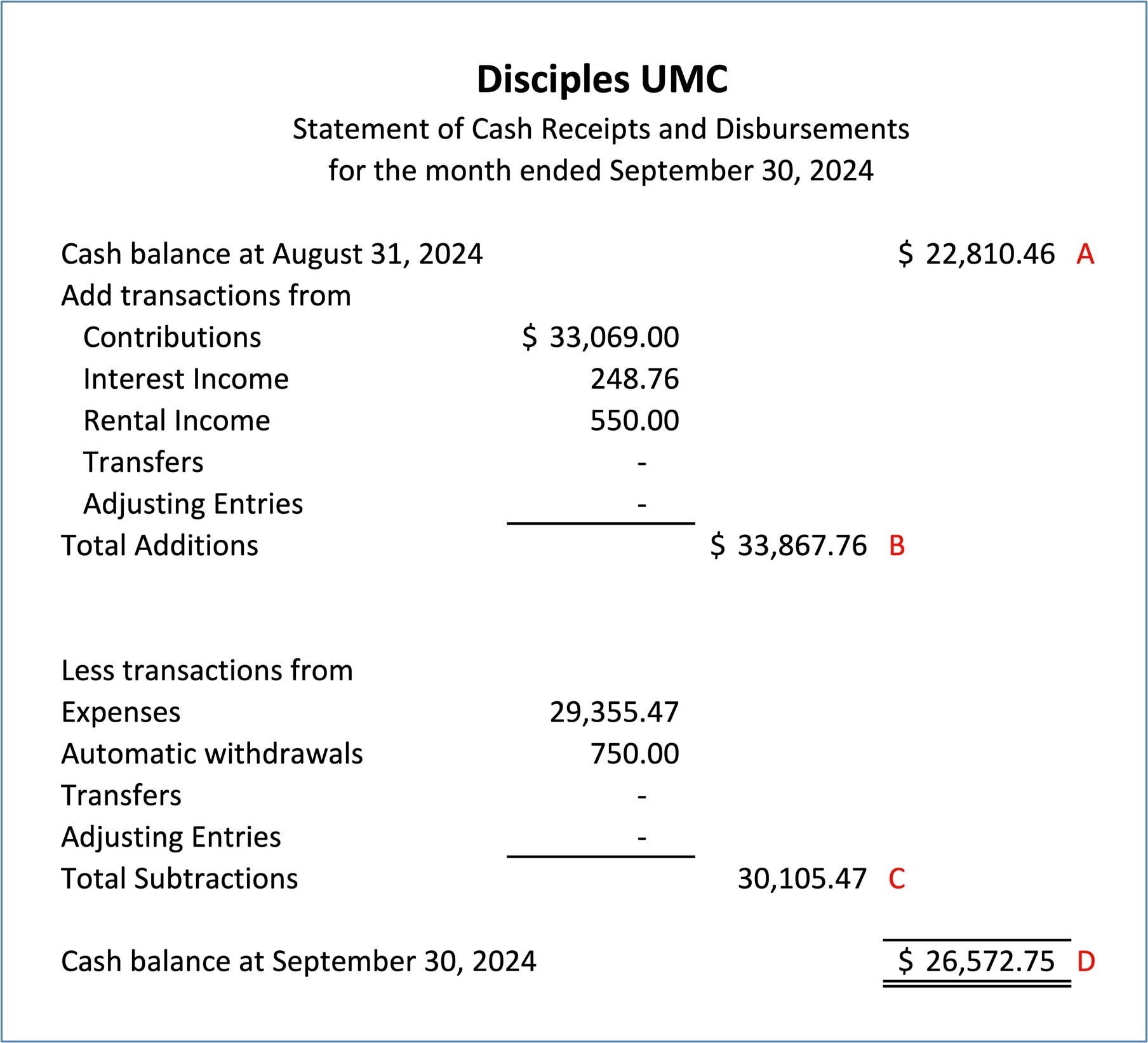
This “checkbook-style” summary begins with the cash balance at the start of the month, adds in receipts, subtracts disbursements, and ends with the closing balance. It’s familiar, simple math.
Fund Activity Report
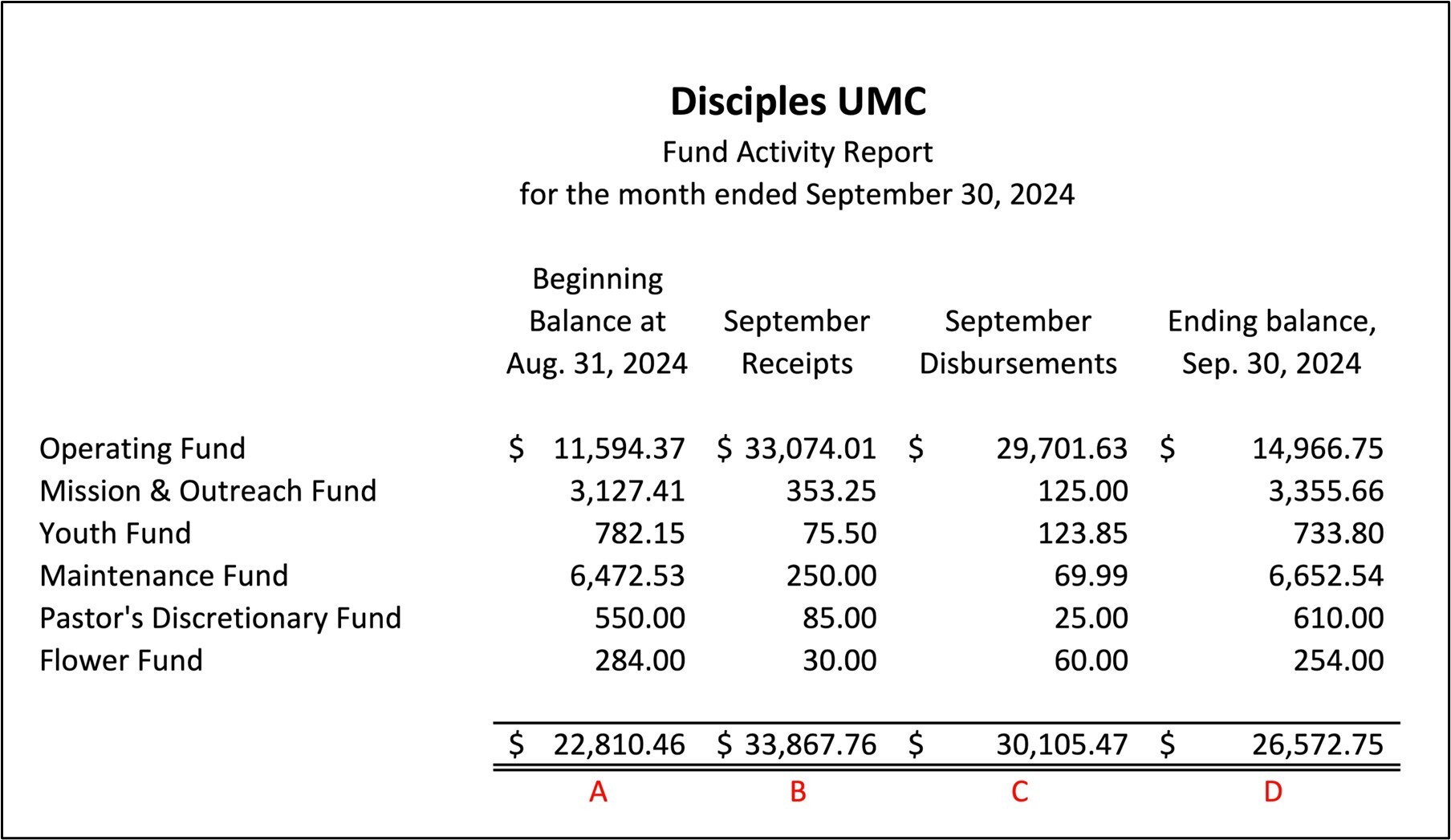
This summary tracks giving and spending across designated funds (like youth, missions, or building funds). It’s useful for showing restricted activity at a glance without diving into line-item detail. Some churches find it helpful to expand these reports by a column or two to compare current numbers with the same month last year.
NOTE: These sample reports are also available in Finance Guidelines for Local Church Leaders by Janet and Phil Jamieson (available from Cokesbury).
Five Steps Churches Can Take
- Talk to Your Finance Committee
Ask: “Who are our financial reports serving? Who is left out of the conversation?”
- Try a One-Page Summary
Offer a monthly or quarterly snapshot: beginning balance, total giving, total spending, and ending balance—maybe with one graph or chart.
- Explain What the Numbers Mean
Include a sentence or two of narrative each month. For example: “Giving was down slightly this month, but year-to-date, we’re still ahead of budget.”
- Use Color or Visuals Where Possible
A pie chart of spending categories or a line graph showing trends over the year can be powerful and accessible.
- Celebrate Impact, Not Just Balances
Use a summary report to highlight ministry wins: “This month, twenty families received help through our food pantry—funded entirely by your generosity.”
Closing Thoughts
Financial transparency is about more than making reports available; it’s about helping people understand the financial story of the church they love. By pairing detailed financial statements with simplified summaries, we make room at the table for everyone. When more people understand where we are financially, they're empowered to help shape where we’re going.
Contact Us for Help
Contact Discipleship Ministries staff for additional guidance.